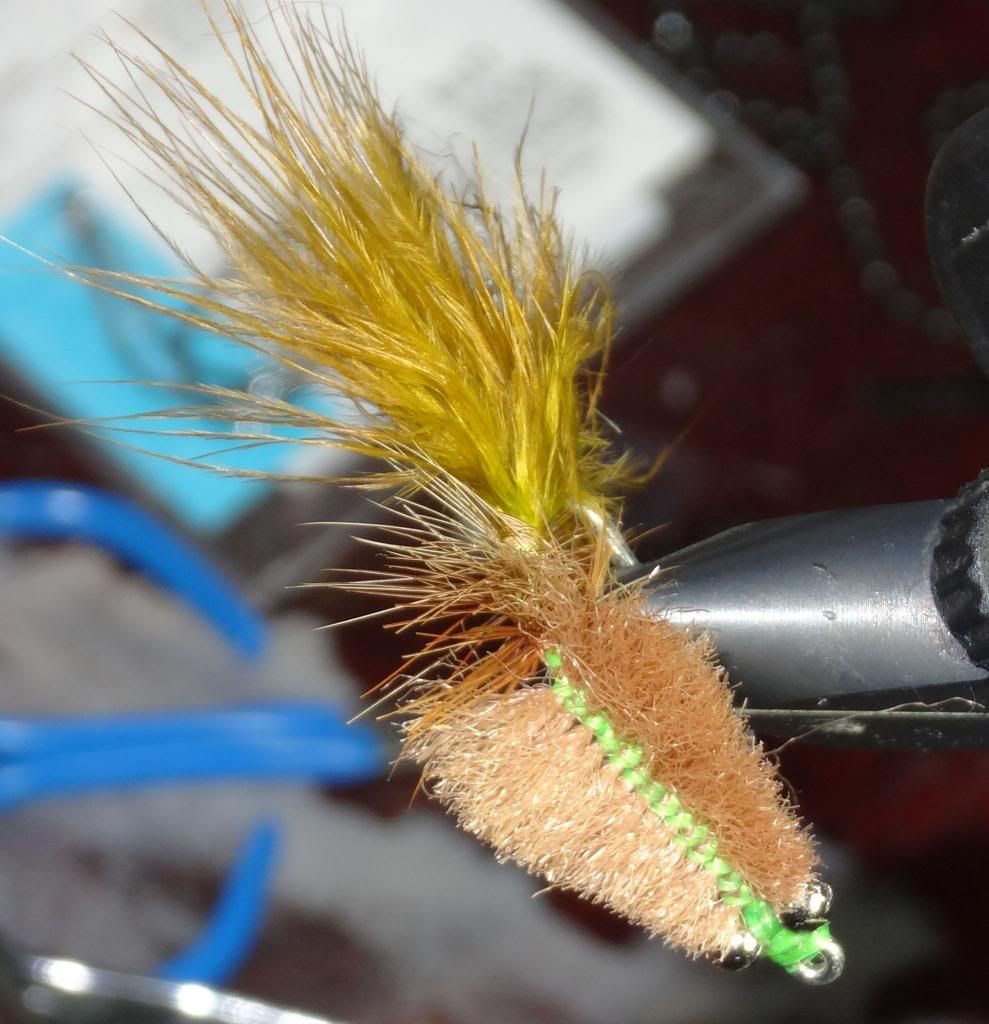
Fished Weedon Island with a friend of mine, Ryan McGue, Friday morning for about two-and-a-half hours. For the first time in weeks, the winds subsided (sort of) and spring's warmth settled in. However, the water's still a little cold. Not much life on the flats. Very few rays or mullet, which usually signal redfish. Neither one of us saw a single red. I saw one snook, took my shot into the mangroves, but didn't get a look.
This week should be warmer. We're still a week away from a good set of tides. Things are looking up as far as sight fishing, which requires the tides, wind and sun to cooperate. I've got my fingers crossed.
Sunday, March 31, 2013
Saturday, March 30, 2013
Casting Away
If you haven't taken a casting lesson in a while, you should. I did so Saturday morning.
Our primary instructor was Dayle Mazzarella, an FFF Master Casting Instructor, who winters in Tampa Bay and summers in Wyoming.
Dayle's taught fly tying at Tampa Bay on the Fly. I didn't sit in on those sessions, but I should have. He's a fabulous teacher.
He can demonstrate good and bad, differentiate between the two and he's got a methodology for how people learn.
A lot anglers can cast well, but not a lot of them can teach. Dayle does both well. That's rare. Teaching's a skill just like anything else. Too often it's taken for granted.
The class can't be summarized in a single blog post, but the big thing he emphasized is this: Less is more. A shorter casting arc and less effort usually result in a cleaner, more efficient stroke. Furthermore, less practice is better than a lot of practice --- if you have a goal for each session. Too many of us practice without a plan. Much of that, unfortunately, is wasted.
My lesson plan: Break down my stroke and practice each element piece by piece. First, I need to shorten my stroke and gradually lengthen it. More on that later.
Our primary instructor was Dayle Mazzarella, an FFF Master Casting Instructor, who winters in Tampa Bay and summers in Wyoming.
Dayle's taught fly tying at Tampa Bay on the Fly. I didn't sit in on those sessions, but I should have. He's a fabulous teacher.
He can demonstrate good and bad, differentiate between the two and he's got a methodology for how people learn.
A lot anglers can cast well, but not a lot of them can teach. Dayle does both well. That's rare. Teaching's a skill just like anything else. Too often it's taken for granted.
The class can't be summarized in a single blog post, but the big thing he emphasized is this: Less is more. A shorter casting arc and less effort usually result in a cleaner, more efficient stroke. Furthermore, less practice is better than a lot of practice --- if you have a goal for each session. Too many of us practice without a plan. Much of that, unfortunately, is wasted.
My lesson plan: Break down my stroke and practice each element piece by piece. First, I need to shorten my stroke and gradually lengthen it. More on that later.
Friday, March 29, 2013
Tarpon turmoil
Nice work from Terry Tomalin at the Times. It's an issue that needs to be addressed.
http://www.tampabay.com/sports/outdoors/trouble-with-tarpon/2111876
Thursday, March 28, 2013
Fly tying again (it's still cold)
This is my second attempt at a Cockroach, a classic tarpon pattern. Pretty simple to tie. Two grizzly hackles, followed by squirrel tail for the collar. The tough part is getting the feathers to splay properly. My first effort they were crooked. This one is better.
The key is to square the feathers properly before you align them with the shank. It's also important to find matching hackles. As you attach them to to the hook, use soft loops to position and then a re-adjust with each thread wrap. When the feathers are straight and relatively secure, then crank on the thread pressure. So much of fly tying, I've learned, is having the patience to be precise. It's an art to adjust and re-adjust as you go.
Thanks to Enver Hysni at Tampa Bay on the Fly for showing me a few of these concepts earlier this week.
Wednesday, March 27, 2013
Full Moon Fever
Full moon Tuesday night. Nice to look at, but not good for fishing. Full moons, IMO, create strong tides, but the fish generally feed at night.
As soon as the cold subsides and the wind settles, I'll be back out on the flats. Can't wait.
Tuesday, March 26, 2013
Monday, March 25, 2013
Subscribe to:
Posts (Atom)