 |
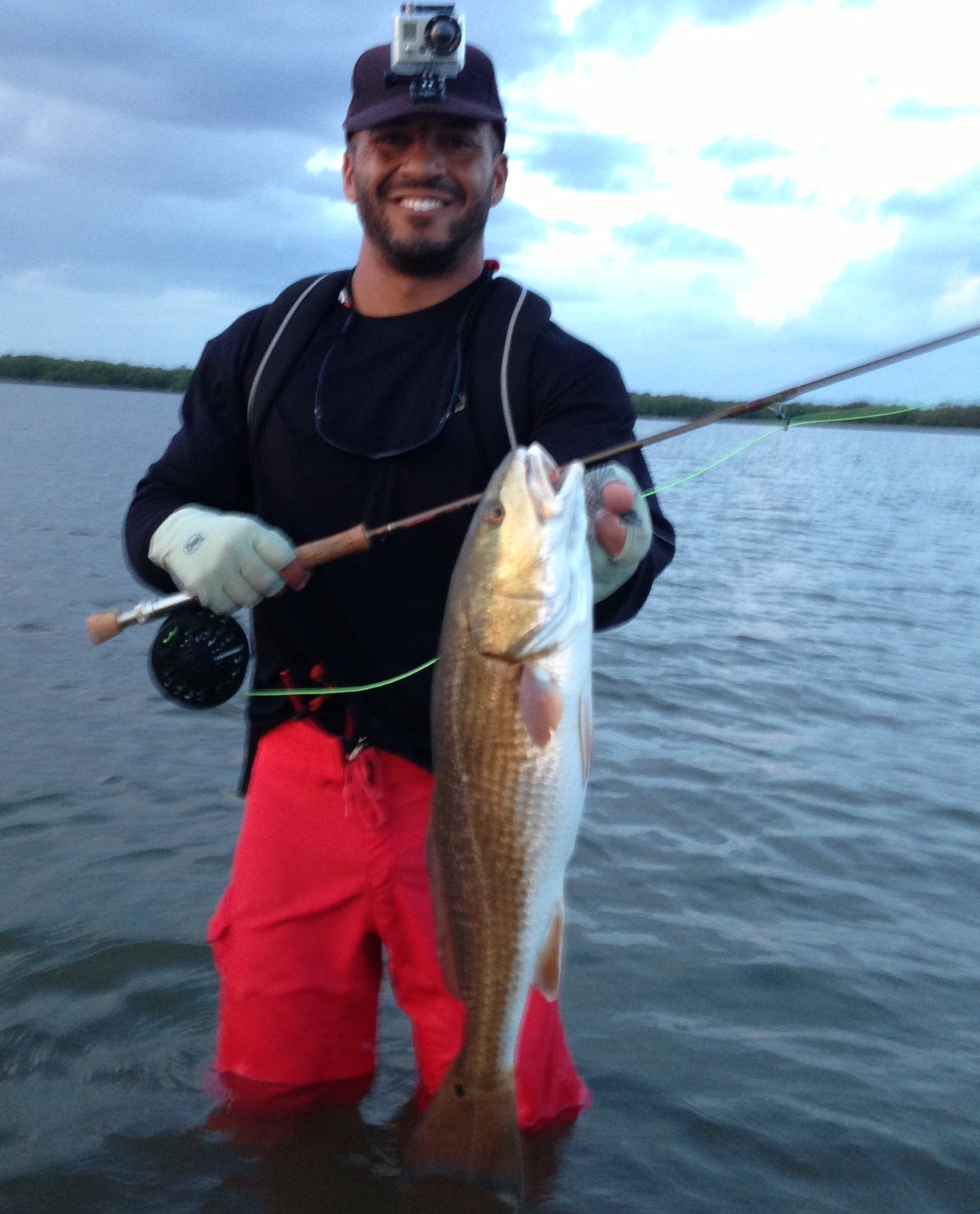
| A nice Tampa Bay red on fly. |
Showing posts with label Fort Desoto. Show all posts
Showing posts with label Fort Desoto. Show all posts
Tuesday, July 9, 2013
Summer Reds in the Bay

Monday, May 13, 2013

Saturday, May 11, 2013
Finding the Fish
I now have the utmost respect for those who sight fish. It's easier --- and more efficient --- to throw a spinning rod with an artificial lure --- or dare I say --- a piece of bait.
But to sight fish, you have to know where the fish and how to find them when the planets don't align. So it was last week at Fort Desoto during a late-evening, new moon flood tide. I went two days. Back to back. Missed my chances on both. Slow learner, I guess.
Day one, I was place conscious. Fished the same flat that yielded fish on the same exact tide a month ago. A stiff northwest wind made for an exceptionally low tide. I sought protection near any lee island I could find. Of course, that strategy didn't help much, because the wind blew hard no matter where I fished. I gave into the elements pretty quickly and chalked it up to one of those things you can't control.
A couple of my buddies, however, were a little more persevering and pushed the deeper on to the flat in deeper, but unprotected water. They found fish. I worked on my casting.
Lesson learned, right? So I thought.I fished the next day determined not to repeat my mistakes. I strayed deeper on to the flat, even though the northwest wind continued to blow. The water level was low, so low that the tips of the turtle grass poked above the surface. That was a telling sign, but I was confident that the incoming --- and the fish --- would find me, if I stayed positive.
A few fish tailed on the outgoing, not long mind you, but enough to keep me interested. So I waited and reminded myself to be patient, that the fish would come to me. An hour passed, then another 10 minutes and the afternoon sun descended below the horizon.
I had about 10 minutes of light left. Not much time to fish, but just enough time to make a run past the tips of the grass to even deeper water. I paddled for a few minutes, much farther than I had before.
The tips of the grass began to fade as I found knee-deep water and I found the fish, tailing away. Moral of the story. If the tide doesn't come in, you have to find enough water to keep the fish happy. The fish won't come to you; you have to go to the fish.
With evening tailers, the window for quality fishing is narrow. Exploring isn't an option. One miscalculation and you're probably done. That's why it's important to invest time on the water. The more experience you have, the better decisions you make on the fly.
But to sight fish, you have to know where the fish and how to find them when the planets don't align. So it was last week at Fort Desoto during a late-evening, new moon flood tide. I went two days. Back to back. Missed my chances on both. Slow learner, I guess.
Day one, I was place conscious. Fished the same flat that yielded fish on the same exact tide a month ago. A stiff northwest wind made for an exceptionally low tide. I sought protection near any lee island I could find. Of course, that strategy didn't help much, because the wind blew hard no matter where I fished. I gave into the elements pretty quickly and chalked it up to one of those things you can't control.
A couple of my buddies, however, were a little more persevering and pushed the deeper on to the flat in deeper, but unprotected water. They found fish. I worked on my casting.
Lesson learned, right? So I thought.I fished the next day determined not to repeat my mistakes. I strayed deeper on to the flat, even though the northwest wind continued to blow. The water level was low, so low that the tips of the turtle grass poked above the surface. That was a telling sign, but I was confident that the incoming --- and the fish --- would find me, if I stayed positive.
A few fish tailed on the outgoing, not long mind you, but enough to keep me interested. So I waited and reminded myself to be patient, that the fish would come to me. An hour passed, then another 10 minutes and the afternoon sun descended below the horizon.
I had about 10 minutes of light left. Not much time to fish, but just enough time to make a run past the tips of the grass to even deeper water. I paddled for a few minutes, much farther than I had before.
The tips of the grass began to fade as I found knee-deep water and I found the fish, tailing away. Moral of the story. If the tide doesn't come in, you have to find enough water to keep the fish happy. The fish won't come to you; you have to go to the fish.
With evening tailers, the window for quality fishing is narrow. Exploring isn't an option. One miscalculation and you're probably done. That's why it's important to invest time on the water. The more experience you have, the better decisions you make on the fly.
Monday, April 15, 2013
Where and When
 |
| Fort Desoto |
I used to believe this verbatim, which is why I spent most of my first year here fishing the lower and upper bay --- Picnic Island, Weedon Island, 4th street, Legion Flats, Rocky Creek, etc --- all with limited success. All of the above spots hold fish, but some places are better for sight fishing than others. Fort Desoto is one of those places.
To sight fish out of a kayak, you need clear water, skinny tides and a food source. Fort Desoto offers all three year round. Most of Tampa Bay does not. The water simply is not clear enough or shallow enough to yield consistent sight fishing. The exception, of course, is winter, when tides are at their lowest and the water's gin clear just about everywhere.
Because it's close to the gulf, Desoto offers lower tides and cleaner water -- and turtle grass. All three elements work together to produce quality sight fishing. The lower and the clearer the water, the easier the fish are to see. Turtle grass offers protection from predators and a variety of crabs and shrimp. Find a flat with productive turtle grass and you'll usually see tailing redfish just about any month of the year.
The best time to go in the spring and summer is late evening/afternoon on a new/full moon with a chance for tailers on the last of the outgoing and the first of the incoming. The later in the day you can time the tidal swing, the better chance you'll have to see tails.
Don't make the same mistake I did and fish close to home because it's convenient. Find the best spot that suits your type of fishing and make the drive. It will be worth it.
Thursday, April 11, 2013
The Prince of Tides
Tides. They're everything. At least in sight fishing.
If you want to fish for tailing reds, it helps to have moving water, the skinnier the better. That's the biggest
factor I failed to grasp when I first started my sight fishing quest a year ago.
My first spring/summer I fished in the morning on the assumption that the water was cooler and the fish were more active. It's a concept I developed from learning how to fly fish on southeastern mountain streams, where water temperature is everything. In the salt, it's not.
Water level and movement are the keys. The tides in Tampa Bay are higher in the morning than in the spring. In the evening, they're lower. The lower the tide, the more concentrated the fish are and the easier it is to see them tailing. The higher the water, the lower chance there is that you will see a tail. There's no set rule in terms of tide height, but 0.5 is my barometer for a low tide.
Of course, it depends on the contour of the flat. Some flats get skinnier than others. Some fish are bigger than others..
If there's two feet of water, it's going to take a pretty big fish for its tail to break the surface. Remember, the less water the better, but there's no magic number.
In the fall and winter, the tides are lower in the morning, higher in the evening. It's the reverse of spring, so plan accordingly to scout for tails.
If you want to fish for tailing reds, it helps to have moving water, the skinnier the better. That's the biggest
 |
| Low tide at Fort Desoto in the evening |
My first spring/summer I fished in the morning on the assumption that the water was cooler and the fish were more active. It's a concept I developed from learning how to fly fish on southeastern mountain streams, where water temperature is everything. In the salt, it's not.
Water level and movement are the keys. The tides in Tampa Bay are higher in the morning than in the spring. In the evening, they're lower. The lower the tide, the more concentrated the fish are and the easier it is to see them tailing. The higher the water, the lower chance there is that you will see a tail. There's no set rule in terms of tide height, but 0.5 is my barometer for a low tide.
Of course, it depends on the contour of the flat. Some flats get skinnier than others. Some fish are bigger than others..
If there's two feet of water, it's going to take a pretty big fish for its tail to break the surface. Remember, the less water the better, but there's no magic number.
In the fall and winter, the tides are lower in the morning, higher in the evening. It's the reverse of spring, so plan accordingly to scout for tails.
Wednesday, April 10, 2013
Trial and error
It took a year of trial and error, tribulation and frustration, but I finally sight fished a red on fly. The Kodak moment came Tuesday evening at Fort Desoto. The fly of choice was a tan redfish toad.
It was an evening tide and I hooked up early on during a new moon flood. I missed the first fish I had a shot at when I failed to strip strike. I hesitated, almost to the point I was skeptical that everything was going to come together. Well, opportunity knocked for the second fish, a happy tailer at the back of the pack. My cast landed short, but the disturbance got the fish's attention and I was ready. A few minutes later, I was calling for the camera.
 |
| A Fort Desoto redfish |
Subscribe to:
Posts (Atom)